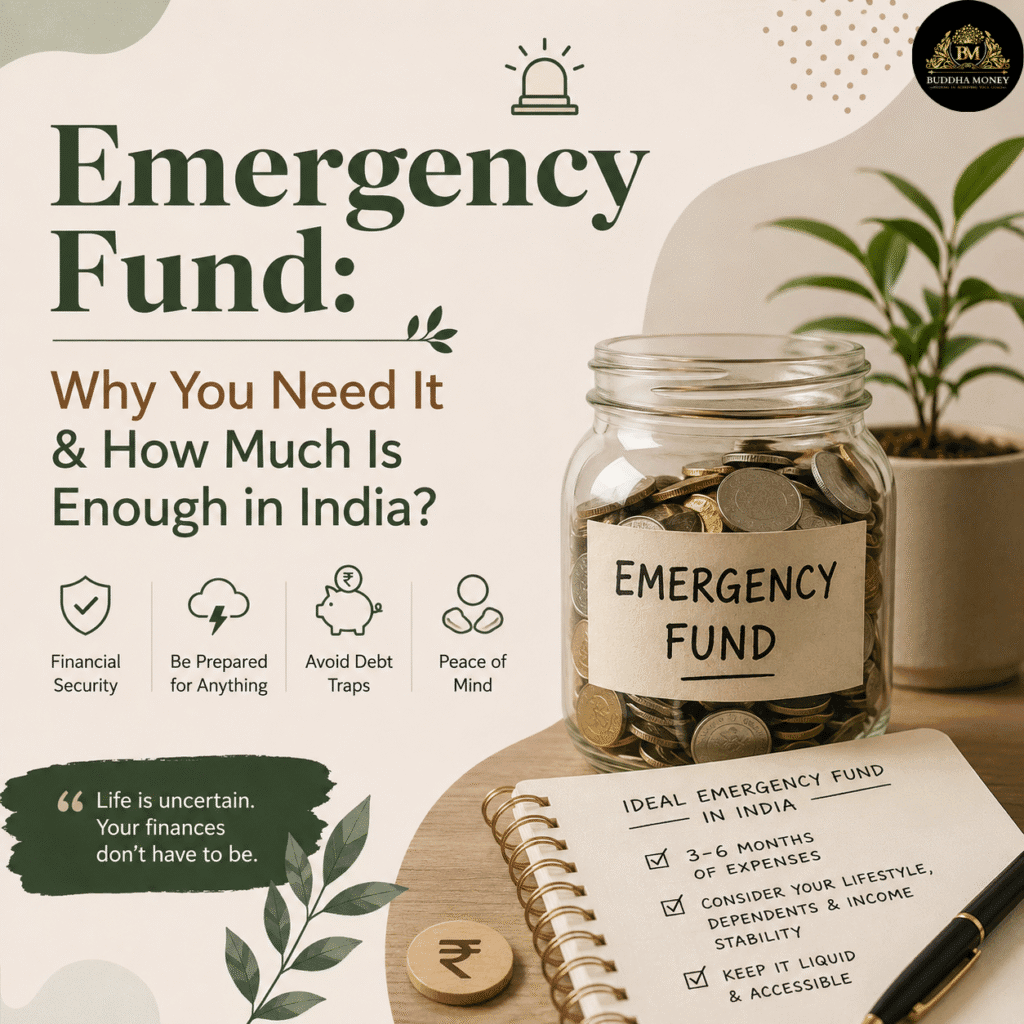
Most people focus heavily on earning more money or investing for higher returns, but very few prepare for the unexpected. Life is unpredictable, and financial emergencies can arrive without warning.
A sudden job loss, medical emergency, business slowdown, accident, family crisis, or unexpected expense can disrupt even a well-planned financial life. In such situations, your investments may not save you immediately—but your emergency fund will.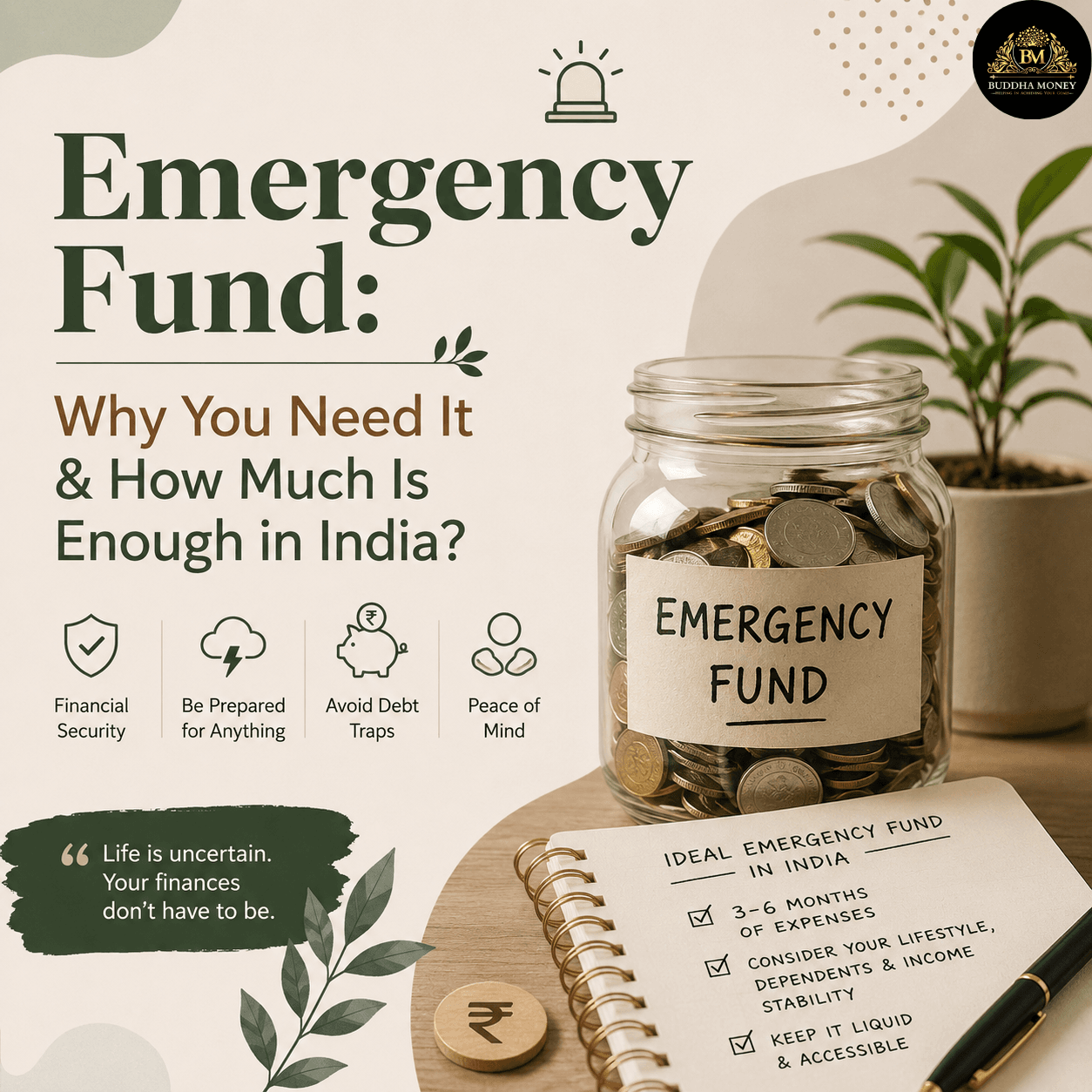
An emergency fund is not just savings. It is your financial safety net, your backup plan, and often the difference between staying financially stable or falling into debt during difficult times.
In this detailed guide, we’ll understand:
- What an emergency fund really means
- Why it is essential in India
- How much emergency savings you actually need
- Where to keep it
- Common mistakes people make
What is an Emergency Fund?
An emergency fund is a pool of money kept aside specifically for unexpected financial situations.
This money is not meant for:
- Vacations
- Shopping
- Luxury expenses
- Planned purchases
It is only for genuine emergencies such as:
- Job loss
- Medical emergencies
- Sudden repairs
- Family emergencies
- Business income disruptions
The main purpose of an emergency fund is simple:
👉 To protect your financial life during uncertain times.
Why an Emergency Fund is Extremely Important in India?
Many people in India believe:
“Nothing bad will happen to me.”
But financial emergencies don’t come with warnings.
India is a country where:
- Medical expenses can rise suddenly
- Job markets can become uncertain
- Businesses may face cash flow problems
- Families often carry financial responsibilities
Without emergency savings, even small financial shocks can force people to:
- Use credit cards
- Take personal loans
- Break long-term investments
- Borrow from others
This creates stress, debt, and long-term financial damage.
An emergency fund prevents this cycle.
The Biggest Benefit of an Emergency Fund
Most people think emergency funds are about money.
Actually, they are about:
- Peace of mind
- Financial confidence
- Emotional stability
Knowing you have backup savings changes how you handle life’s uncertainty.
It allows you to:
- Make calmer decisions
- Avoid panic
- Stay invested during market crashes
- Protect long-term financial goals
How Much Emergency Fund is Enough in India?
This is the most common question.
There is no one fixed amount for everyone because every person’s lifestyle and responsibilities are different.
However, the general rule is:
👉 Maintain at least 6 to 12 months of essential expenses.
What Counts as Essential Expenses?
Your emergency fund should cover:
- House rent or EMI
- Food & groceries
- Electricity & bills
- Insurance premiums
- Children’s education
- Medical expenses
- Transportation
- Basic lifestyle costs
Do not include luxury spending.
Example: Emergency Fund Calculation
Let’s say your monthly essential expenses are:
| Expense | Monthly Amount |
| Rent/EMI | ₹20,000 |
| Groceries | ₹10,000 |
| Utilities | ₹5,000 |
| Insurance | ₹5,000 |
| Transportation | ₹5,000 |
| Other Essentials | ₹5,000 |
👉 Total Monthly Expenses = ₹50,000
Now:
- 6 months fund = ₹3,00,000
- 12 months fund = ₹6,00,000
This becomes your financial cushion during emergencies.
Who Should Keep a Bigger Emergency Fund?
Some people need larger emergency savings than others.
You should ideally maintain a bigger emergency fund if:
- You are self-employed
- You run a business
- Your income is irregular
- You are the sole earning member
- You have dependents
- You work in unstable industries
People with stable government jobs may require relatively lower emergency reserves compared to freelancers or business owners.
Where Should You Keep Your Emergency Fund?
An emergency fund should always be:
✅ Safe
✅ Easily Accessible
✅ Highly Liquid
Remember, an emergency fund is not meant to generate maximum returns. Its primary purpose is to provide quick access to money when you need it the most.
Best Places to Keep Emergency Funds in India
✔️ Savings Account
Provides immediate access to your money and is ideal for handling urgent expenses without any delay.
✔️ Sweep-In Fixed Deposit
Offers slightly better returns than a regular savings account while allowing funds to be accessed when required.
✔️ Liquid Mutual Funds
Liquid Mutual Funds are often considered a suitable option for a portion of your emergency fund because they aim to provide better returns than a traditional savings account while maintaining a high level of liquidity.
The biggest advantage is that your money remains invested and has the potential to earn reasonable returns, but in case of an emergency, you can usually redeem the funds relatively quickly. This helps your emergency corpus work a little harder instead of sitting completely idle, while still remaining accessible when needed.
💡 The goal is to strike the right balance between safety, accessibility, and reasonable returns.
👉 An emergency fund should be available when you need it—not locked away in investments that may be difficult to access during a crisis.
Where NOT to Keep Emergency Funds
Avoid keeping emergency money in:
- Stocks
- Equity mutual funds
- Real estate
- Long lock-in investments
Because emergencies require quick access and stability—not market risk.
Common Mistakes People Make with Emergency Funds
❌ Investing Emergency Money in High-Risk Assets
Many people try to earn higher returns by investing emergency savings in equity markets.
This defeats the purpose of safety.
❌ Using Emergency Funds for Lifestyle Expenses
An emergency fund should not become a spending account for:
- Shopping
- Vacations
- Festivals
- Gadgets
Otherwise, it won’t be available during real emergencies.
❌ Delaying Emergency Fund Creation
Many people start investing aggressively without building emergency savings first.
Then during crises, they are forced to redeem investments at the wrong time.
Emergency Fund vs Investment: What Should Come First?
This is a very important question.
Before aggressively investing for wealth creation:
👉 Build your emergency fund first.
Why?
Because without financial protection:
- One emergency can destroy years of investments
- You may exit investments during market downturns
- Debt can replace savings
Emergency funds create stability, which allows investments to grow peacefully.
How to Build an Emergency Fund Faster
Building a large fund may feel difficult initially, but consistency matters more than speed.
Simple Steps to Build It
✔️ Start Small
Even ₹2,000–₹5,000 monthly is a good beginning.
✔️ Automate Savings
Set automatic transfers every month.
✔️ Use Bonuses Wisely
Allocate part of bonuses or extra income.
✔️ Avoid Lifestyle Inflation
Instead of increasing spending immediately, strengthen your emergency reserves.
Should You Continue SIPs While Building Emergency Funds?
Ideally:
- Build a basic emergency reserve first
- Then continue balancing SIPs and savings together
You don’t have to stop investing completely, but emergency security should become a priority.
The Psychological Power of Emergency Savings
Financial stress affects:
- Mental peace
- Relationships
- Decision-making
- Career choices
An emergency fund gives flexibility and confidence.
It allows you to:
- Handle uncertainty better
- Avoid toxic financial dependence
- Take calculated career or business decisions
Emergency Funds Became More Important After COVID
The COVID-19 pandemic completely changed the way people think about money and financial security.
The situation during and after COVID made people across the world realize that life can be unpredictable, and financial challenges can arise without warning.
Many individuals experienced:
- Salary cuts
• Business losses
• Medical emergencies
• Job uncertainty
• Unexpected financial disruptions
For many families, it was a wake-up call. People who had an emergency fund were able to manage difficult situations with far less stress, while those who relied entirely on their monthly income faced greater financial pressure.
Since then, awareness about financial preparedness has increased significantly. More people now understand that building a safety cushion is not a luxury—it is a necessity.
COVID taught the world an important lesson:
👉 Financial security is more important than financial appearance.
Because when uncertainty arrives, savings provide confidence, stability, and peace of mind—not just wealth. 💡💰
Our Thoughts
An emergency fund may not look exciting like stock market returns or aggressive investments.
But it is one of the most important foundations of financial planning.
Before building wealth, protect yourself financially.
Because the real purpose of money is not only growth—
👉 It is also stability during difficult times.
Remember:
A strong emergency fund doesn’t just protect your finances… it protects your peace of mind.